
Shivani Chowdhry, PhD, worked as a data science intern at TCAI. She has since taken on a full-time role as a Data Scientist at CBRE. We wish her all the best as she continues her career in data science. The following is her reflection on her time with us.
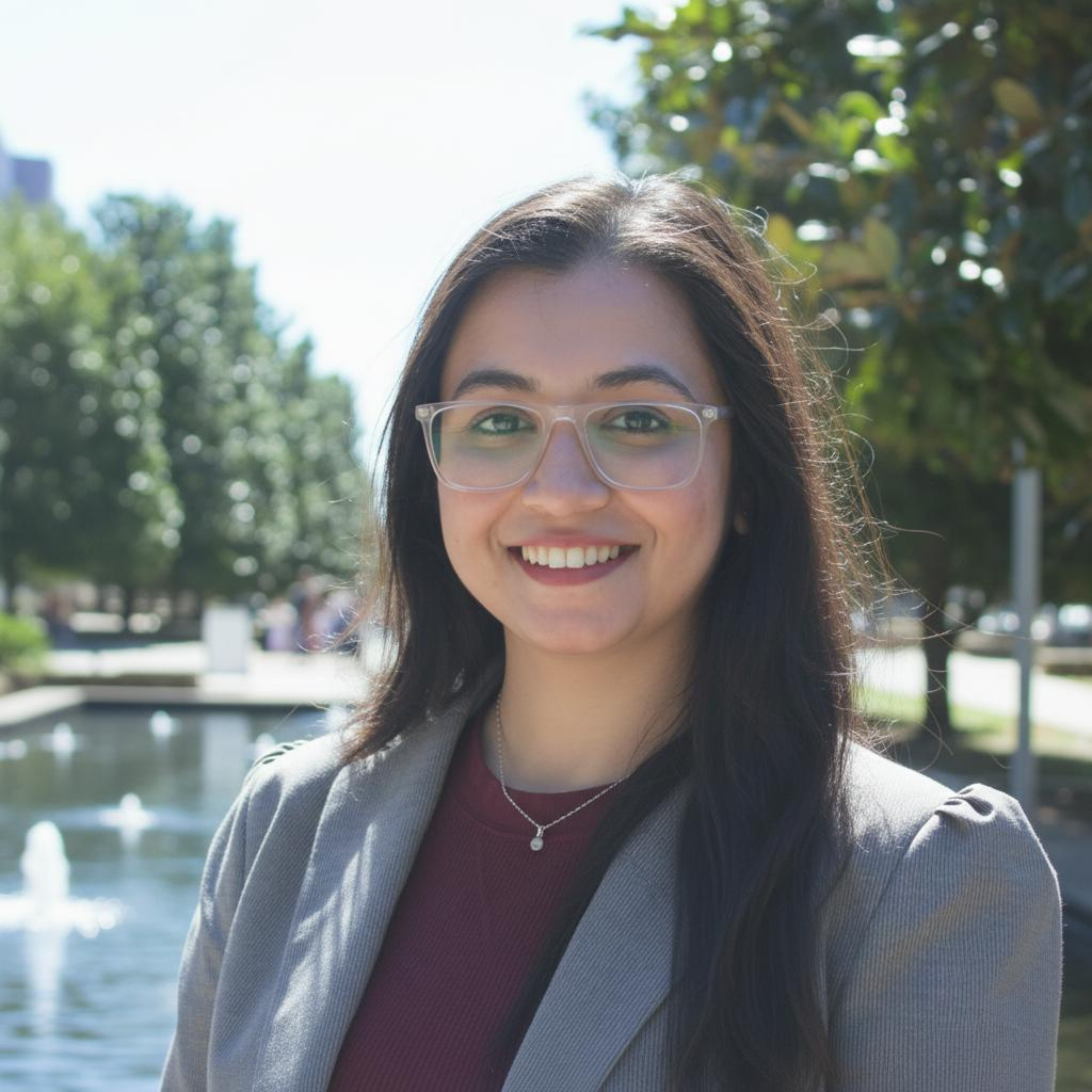
My internship at TCAI from November to December 2025 was my first experience working inside an early-stage startup, and it really changed how I understand data science in practice. Coming from an academic background where projects are often well-defined, methodologically clean, and built on structured datasets, TCAI exposed me to the realities of building data science systems under uncertainty— messy data, evolving requirements, and constant trade-offs between rigor and what's actually feasible.
The Work
I worked on clinical procedure code mapping, specifically aligning local hospital procedure names to standardized OMOP concepts for use in analytics, interoperability, and research. While this initially appeared to be a straightforward matching problem, it quickly became clear that string similarity alone was not enough. Procedures with similar wording could refer to entirely different clinical actions, while semantically identical procedures could be phrased very differently across systems. I learned to design a hybrid workflow that combined fuzzy matching with large language model reasoning to evaluate clinical intent, anatomy, and procedure type—an approach that improved accuracy while keeping results transparent and easy to review.
A key lesson from this project was that effective automation is rarely "all or nothing." The automated matching worked well for high-confidence cases, but in the gray area, I had to build in structured human-in-the-loop decision-making so that a domain expert could weigh in where the algorithm wasn't confident enough.
What It Taught Me
Through this work, I came to understand how modern AI tools fit into real production pipelines—not as replacements for domain expertise, but as tools that can speed things up when you set clear boundaries around them. I also gained experience creating structured outputs and documentation for team review and validation, reinforcing the importance of clarity and trust in data work.
Perhaps the most valuable takeaway from my internship was a shift in how I think about 'good' data science. In academia, success is often defined by methodological novelty or statistical elegance. At TCAI, success was defined by whether a solution actually worked in practice and could grow with the business.
Acknowledgments
I am especially grateful to Vikas for trusting me with meaningful responsibility and encouraging my curiosity and ownership. Our in-office conversations were particularly valuable, helping me think through problems more clearly, understand technical challenges, and reflect on my own career development.
I also owe a great deal to Sally, the Senior Data Scientist, whose mentorship, feedback, and patience as I dabbled in new tools and asked many basic questions—she helped me grow both technically and professionally. The opportunity to work through her existing codebase and see how projects were structured taught me how to write clearer, production-ready code.
Their guidance made this internship not just a learning opportunity, but a genuinely formative introduction to the world of professional data science. I am also grateful for their understanding and flexibility when I needed to wrap up my internship earlier than planned after accepting my first full-time data science role. I'm excited to see TCAI continue to grow and wish the team all the best.