
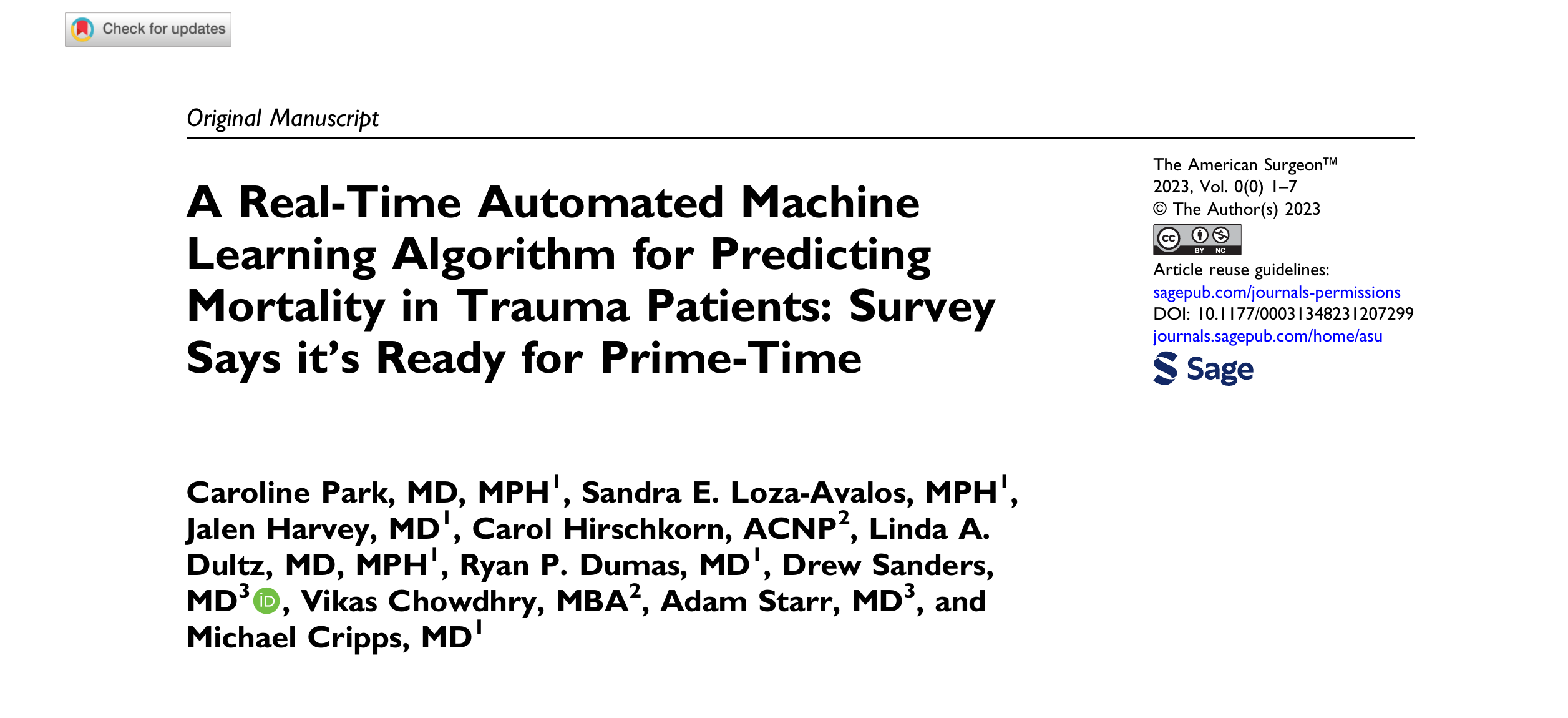
We are pleased to share this paper published in The American Surgeon, which evaluates the real-world implementation of the Parkland Trauma Index of Mortality (PTIM) — a real-time, automated machine learning algorithm embedded directly in the electronic health record (EHR) to predict mortality in trauma patients.
Why This Work Matters
While artificial intelligence has been increasingly applied to patient care, many predictive models remain retrospective and are not readily available for real-time decision-making. To our knowledge, PTIM is the first real-time, fully automated algorithm that prospectively estimates mortality risk in trauma patients. Unlike traditional scoring systems that require manual input or lengthy calculations, PTIM is integrated directly into the EHR, extracts data automatically, and calculates an hourly mortality prediction requiring no input from the clinician.
How PTIM Works
The PTIM score evaluates 23 variables — including Glasgow Coma Score (GCS), vital signs, and laboratory data — to predict the mortality risk of trauma patients over the next 48 hours. Because it pulls data directly from the EHR, it eliminates the human error associated with manual input and allows clinicians to spend more time on planning and delivering patient care.
Key Findings
In this prospective, survey-based study conducted at a Level 1 trauma center, 40 surveys were completed by surgical providers. The results showed:
- 77% of providers reported that PTIM assisted their treatment decisions
- 66% said it helped with timing of surgical intervention
- 61% agreed it integrated easily into rounds and patient assessment
- 58% felt it improved efficiency in assessing patients' potential mortality
Providers identified GCS, age, and maximum heart rate as the top three predictors of mortality — which closely aligned with the algorithm's own calculated top predictors, demonstrating a strong correlation between clinical intuition and the model's findings.
Looking Ahead
The preliminary findings of this paper were presented at the American College of Surgeons Clinical Congress in October 2022. The next steps include evaluating the short- and long-term impact on patient outcomes and expanding this work through multi-center collaboration.
This paper was authored by Dr. Caroline Park, Sandra Loza-Avalos, Dr. Jalen Harvey, Carol Hirschkorn, Dr. Linda Dultz, Dr. Ryan Dumas, Dr. Drew Sanders, Vikas Chowdhry, Dr. Adam Starr, and Dr. Michael Cripps at the University of Texas Southwestern Medical Center and Parkland Memorial Hospital.